Sehr hilfsbereit bei Fragen, telefonischer Rückruf immer freundlich
vor 27 Tagen
Jede Frage wird schnell beantwortet und bestens erklärt, alles sehr unkompliziert!
10.07.2026
Die Flexyfity Academy ist so gut aufbereitet - die Videos, die Skripte, die Prüfungen - alles ist verständlich, gut strukturiert und es hat so viel Freude gemacht hier zu lernen. Bei technischen Problemen hat sich der Support innerhalb kürzester Zeit zurückgemeldet und ich habe mich stets bestens betreut gefühlt. Auch meine Prüfungsangst war schnell verflogen, weil die Prüfungsdozentin so nett gewesen ist. Ich freue mich schon jetzt auf weiter Kurse in der Academy und empfehle sie weiter.
09.07.2026
Super und unkomplizierter Service!
15.06.2026
Super Beratung, alles hat perfekt funktioniert. Sehr freundlicher und professioneller Service. Ich freue mich schon auf die Ausbildung und kann die Betreuung nur weiterempfehlen!
14.06.2026
Sehr höfliche und sehr schnelle Beratung.
19.05.2026
Ich bin mit Flexifit sehr zufrieden.
E-Mails werden immer schnell und hilfreich beantwortet und auch telefonisch bekommt man freundliche und kompetente Auskünfte.
Ich habe auch an den Kursen teilgenommen und fand die Kurse sehr gut organisiert und interessant.
Die Vortragenden waren professionell und hilfsbereit.
Insgesamt bin ich sehr zufrieden und kann Flexifit nur weiterempfehlen.
13.05.2026
Schnelle und unkompliziert Hilfe! Der Kontakt war immer außerordentlich hilfsbereit und freundlich.
24.04.2026
Super Kundendienst
21.04.2026
Fundierte Ausbildung, aussagekräftige Skripten und Videos, toller Support!
13.04.2026
Schnell und nicht aufwendig!
01.04.2026
Sehr umfangreiche und interessante Ausbildung.
Sehr nette und kompetente Referenten.
25.03.2026
Die Inhalte sind echt toll wie auch die Trainer. Es ist unkompliziert online eine Ausbildung neben Arbeit und Kindern zu verrichten.
Wenn eine Ausbildung dann wieder über flexifit
13.03.2026
Sehr nettes und kompetentes Team. Tolle Ausbildungen. Danke Euch 🙏🏽🫶🏽
06.03.2026
Bei Rückfragen zu einem Kurs, die ich über die Chat-Funktion gestellt habe, habe ich sofort Antwort bekommen und das Angebot für ein spontanes Telefonat. Da fühlt man sich gleich mal gut aufgehoben.
Nach dem Telefonat habe ich mich gut abgeholt gefühlt und zusätzlich alle besprochenen Punkte per Email schriftlich auch noch erhalten.
Großartig!! Das war der Auslöser, dass ich den Kurs auch sofort gebucht habe
14.02.2026
Kundenservice vorab zur Bestellung durch Melanie - sämtliche Fragen wurden umfassend und sehr rasch beantwortet
10.02.2026
Eine super tolle learning Plattform. Fragen egal welches Thema werden sehr schnell beantwortet.Note 1
Foot reflexology
Education
Certified Foot Reflexology
Foot reflexology massage: find your inner balance!
Become a Certified Foot Reflexology Therapist – Holistic Massage Through the Feet
Foot reflexology is based on the concept that specific zones of the foot correspond to organs and regions of the body. By applying targeted pressure to these reflex zones, blockages are released, the body’s self-healing powers are stimulated, and overall well-being is promoted. Our training program provides you with in-depth knowledge and practical skills—ideal for anyone who wants to apply this valuable technique in a professional or personal setting.
Training in Foot Reflexology
Whether you’re already working in the healthcare field or just starting out—our training program equips you with everything you need to perform foot reflexology effectively and professionally. This ensures you’re fully prepared to offer your clients a gentle yet effective method for relaxation and promoting well-being.
What to Expect from the Training
You’ll start with the theoretical foundations: the history and principles of foot reflexology, the anatomy of the foot, and how specific reflex zones correspond to organs and body regions. This foundation is essential for applying the method safely.
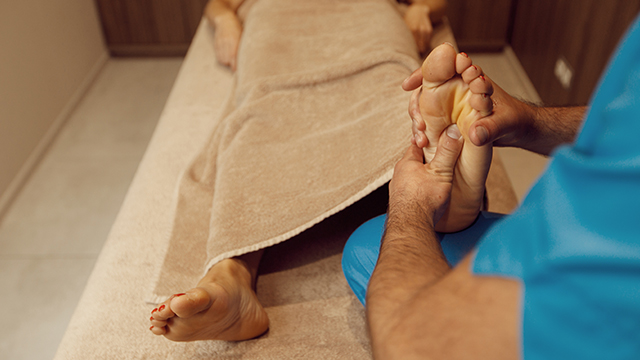
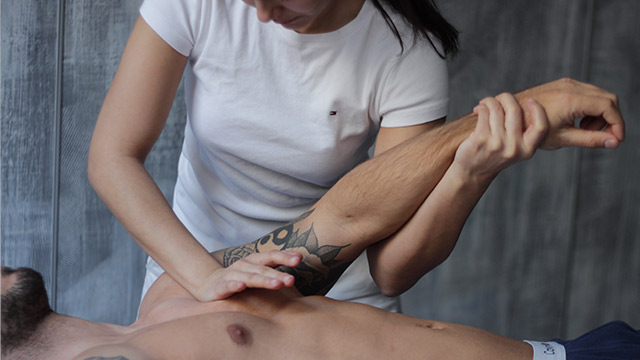
In the practical portion, you’ll be introduced step-by-step to the basic techniques. Under the guidance of experienced instructors, you’ll practice on training partners, refine your technique, and learn to tailor the massage to your clients’ individual needs —such as promoting relaxation in cases of stress and tension.
What does a foot reflexologist do?
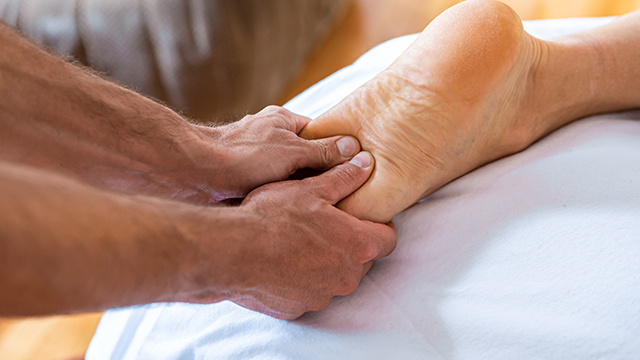
As a foot reflexologist, you apply targeted pressure techniques to stimulate reflex zones on the foot that are connected to various parts of the body. You stimulate the body’s self-healing abilities and promote relaxation.
You work one-on-one with your clients, identify their needs, and tailor the massage accordingly. Consultation and attentive observation play a central role in promoting physical and emotional well-being as effectively as possible.
Where do foot reflexology practitioners work?
A wide range of career opportunities awaits you, all centered on relaxation and well-being:
Wellness & spa facilities
Health centers
Practices offering holistic treatments
In a private setting (as one-on-one sessions)
Your Recognized Certification
Upon successful completion, you will receive the “Certified Foot Reflexology Therapist” diploma. Your certificates are available in multiple languages (DE, EN, ES), with country-specific information, and with or without grades printed on them.
All versions are available for download free of charge. In addition, you’ll receive a printed certificate of your choice on high-quality specialty paper with embossed lettering.
In our numerous workshops, you’ll learn new techniques through hands-on practice and enhance your marketability.
Here’s what you need to get started
Online or written registration
Minimum age of 18 (under 18 with written consent from a parent or guardian)
Do you have specific questions about the training program?
We’re happy to help—by phone, email, or chat. Ask us your question now—it’s free and there’s no obligation.
Online Inquiry
Legal Notice
The practical application of the knowledge acquired in this course requires—depending on the country—an existing professional license (e.g., as a commercial massage therapist or therapeutic massage therapist). If the course is taken as a standalone course, the knowledge acquired may be used exclusively for private purposes, within the context of family and neighborhood assistance, or within an employment relationship.
The continuing education courses offered are intended solely to impart knowledge and skills for use on healthy individuals. Neither medical therapies are taught nor practiced; the course content does not constitute medical training and is not a substitute for medical or therapeutic treatment. Participants are responsible for applying the knowledge they have acquired in accordance with the applicable legal provisions of their country.
Course Content - What You'll Learn During the Training Program
Extent of learning
348 E |
Volume
MKP
200
Massage expertise
PL
108
Presence | Self-study
RE
5
Literature research
TE
30
Practical realization
AE
5
Additional tasks & examinations
Our training programs are generally eligible for funding. The relevant funding agency will determine whether your funding application is approved.
We’re happy to help you gather all the necessary course information you’ll need for your funding application.
Of course, we’ll be there to advise you throughout the entire process and guide you from your initial inquiry all the way through the submission of your application. Contact us—we’ll make sure you’re as well-prepared as possible!
Here you'll find a detailed overview of all the modules, subjects, and chapters included. Explore the entire structure and scope of the program and get a clear understanding of the content covered.
Module Massage expertise
Psychological basics (massage)
The subject"Psychological basics" in the basic massage skills module provides essential knowledge of psychology, which is crucial for dealing professionally with clients in massage practice.
Participants gain basic knowledge of psychology, particularly in dealing with stress, relaxation and emotional reactions. The introduction to the psychological aspects of massage helps participants to understand how to deal with stress and emotional reactions of clients. Techniques to promote relaxation and well-being are also taught.
Another focus is on communication skills and building a therapeutic relationship. The importance of communication in massage practice is emphasized and how to build and maintain a therapeutic relationship is taught. Empathy and maintaining a professional distance when dealing with clients play an important role.
This subject provides in-depth training in the areas of psychological knowledge and communication skills to create a trusting and supportive environment for clients and promote their well-being.
Pathology in massage
The "Pathology" subject in the basic massage skills module provides essential knowledge that is essential for safe and effective massage practice.
The basics of pathology and common conditions are covered, including:
Introduction to pathology
Key pathologies that need to be considered during massage
Effects of various conditions on the body and musculature
In addition, participants will learn about the indications and contraindications for massage:
Definition and meaning of indications and contraindications
Recognition and assessment of indications
Identification of contraindications and how to deal with them
Another important aspect is recognizing and dealing with medical emergencies during a massage, including
Common medical emergencies
Emergency management and immediate action
Collaboration with medical professionals
Massage techniques and grips
In the "Massage Techniques and Practices" subject, basic massage techniques are taught using online learning videos. These videos provide participants with a comprehensive introduction to the various techniques and allow them to familiarize themselves with the basics at their own pace. In the practical module "Massage techniques and hygiene", these techniques are then intensively practiced and deepened on site.
Participants have the opportunity to familiarize themselves with the various massage techniques through the instructional videos and learn them step by step. This prepares them optimally for the practical exercises. They can apply what they have learned on site and improve it with direct guidance from experienced instructors and trainers.
Professional ethics and professionalism
The subject"Professional Ethics and Professionalism" in the basic massage skills module teaches essential ethical principles and rules of conduct that are essential for a professional massage practice. The course begins with an introduction to professional ethics, covering in detail the ethical principles and their importance in practice. Participants will learn how to deal with ethical dilemmas and make decisions that are in the best interest of their clients.
Another important aspect is dealing with clients, data protection and confidentiality. The training covers guidelines for dealing with clients in a professional manner, adhering to data protection guidelines and maintaining confidentiality. It emphasizes the importance of trust and respect in the relationship with clients and how these values can be upheld through professional practice.
In addition, fundamentals of professional demeanor and effective communication strategies are taught. Participants will learn how to maintain a professional appearance and build a successful relationship with their clients. Communication strategies for dealing with clients, including techniques for conflict management and resolution, are also covered. This subject emphasizes the development of a professional attitude and the ability to act appropriately and ethically in a variety of situations.
Ergonomics and self-care
The"Ergonomics and self-care" subject in the basic massage skills module focuses on correct posture and ergonomics for therapists to avoid strain and injury. The importance of ergonomics in massage practice is emphasized and techniques for avoiding strain are taught. Practical exercises to improve posture are also a key part of this module.
In addition, self-care and recovery techniques for therapists are taught. The importance of self-care is emphasized as it is crucial for the long-term health and performance of therapists. Self-massage techniques and relaxation exercises are introduced to help therapists take care of themselves. Strategies for recovery and injury prevention are also covered to ensure sustainable practice and protect therapists' health.
Customer management and marketing
The subject"Client management and practice management" in the basic massage skills module provides essential knowledge for the successful operation of a massage practice. It begins with building and maintaining a client file, emphasizing the importance of a well-maintained client file. Participants will learn techniques to effectively manage client data and comply with data protection and legal requirements.
Another focus is the design and maintenance of the working environment. Here, participants learn how to design the massage area in the best possible way to create a welcoming atmosphere. High standards of hygiene and cleanliness are taught, and the need for regular maintenance and care of massage rooms and equipment is emphasized.
The third area of the subject focuses on marketing and customer retention. The basics of marketing for massage practices are explained and participants develop strategies for attracting and retaining customers. The use of social media and other digital marketing tools to increase the reach and awareness of the practice will also be addressed.
This subject provides comprehensive training in client management, practice management and marketing to ensure the successful operation and growth of your massage practice.
Hygiene and safety
The subject"Hygiene" in the basic massage competence module deals comprehensively with the essential hygiene standards and safety measures in massage practice.
It begins with the importance of hygiene in massage practice, followed by detailed hygiene guidelines and their implementation. Participants are given practical tips for maintaining hygiene to ensure a safe and clean working environment.
Another focus is on safety measures. Safety precautions for everyday practice are presented here, including specific protective measures for massage therapists and clients.
Anatomy
We educate the best trainers in the fitness branch. From start to finish of the education - and beyond!- we support and guide our students.
Functional anatomy is a foundation necessary for all trainers in exercise, fitness and sports. This subject provides a comprehensive introduction to the anatomy of the human body and a wellspring of important knowledge.
The course is constructed to present the information in an interesting and comprehensible manner and features different learning approaches appropriate for Fitness and Personal Trainers.
The goal is, to understand the relationship between movement patterns, the human body and relevant anatomical terminology.
Physiology
A working understanding of human physiology and therefore the relationships between the various functions of the human body is crucial for anyone working in the exercise and fitness field. It is a requisite knowledge for the sufficient practice of their profession.
This course makes the relationships within the human organism graspable for everyone. Take a deep-dive into the human body and learn the functions of our organism for your new profession in fitness.
In this subject you will get a close look at energy metabolism needed for muscle activation, the circulatory system and the pulmonary system.
Any high quality education in fitness and exercise begins with the foundations of anatomy and physiology.
First aid & sports injuries
Since injuries are a daily occurrence in sports, it is important to know about the causes and consequences of the most common injuries. In case of an emergency the personal trainer must be able to react quickly and correctly.
In addition, the understanding of various injury patterns helps to be able to avoid them from happening.
The aim of this subject is to teach participants the basic massage techniques that serve as preparation for further training. It introduces the classic techniques that every massage therapist should master, regardless of their subsequent specialization. These basic techniques form the foundation for all further massage training and enable participants to develop a solid basis.
The classic massage techniques covered in this course include:
Effleurage (strokes)
Petrissage (kneading)
Friction (rubbing)
Tapotement (tapping)
Vibration (shaking)
In addition to the practical application of these techniques, the important hygiene guidelines are also discussed. This includes
Cleaning: The correct cleaning of the workplace and the materials used. Disinfection: Effective disinfection methods to prevent the spread of pathogens. Personal hygiene: The importance of the masseur's personal hygiene to ensure a hygienic environment for clients.
Module Foot reflexology massage
Introduction to foot reflexology
The subject "Introduction to reflexology" provides fundamental knowledge and serves as a basis for practical training. It begins with an overview of the history and theoretical basis of reflexology, including the development of the technique and the underlying principles that explain how reflex zones are connected to different organs and areas of the body. Participants will learn the anatomy of the foot in detail in order to identify the correct reflex zones for specific organs and body functions.
In addition, the indications and contraindications of reflexology are covered so that participants know when and how to use the technique safely. The course also includes an introduction to the scientific basis, discussing current research on the effectiveness of reflexology to promote evidence-based practice. Finally, ethical aspects and professional behavior in therapeutic practice are addressed to prepare participants for their responsibilities as therapists and to help them build a professional relationship with their patients. This module thus offers a comprehensive introduction to the theory and ethics of foot reflexology.
Preparation & basics of the massage
The subject "Preparation and basics of massage" prepares participants comprehensively for the practical implementation of foot reflexology massage. It begins with hygienic and organizational preparation, in which hygiene standards and workplace preparation are covered in detail. Another important aspect is the selection and care of aids such as oils and creams, which are required for an effective massage.
The basic techniques of foot reflexology are a central part of the course. Participants learn various pressure techniques and how to apply them, as well as the correct rhythm and intensity, which must be individually adapted to the patient.
Another focus is on patient preparation and communication. The course teaches how to learn and apply relaxation techniques for the patient. The importance of communication is also emphasized, in particular how to build trust and create a sense of well-being in the patient.
The therapist's posture and ergonomics are also addressed to ensure that the massage is performed efficiently and without strain on the therapist. This includes ergonomic working methods and self-care techniques to avoid strain.
Finally, the subject deals with self-reflection and further development of the therapist. Here, participants learn how to evaluate and continuously improve themselves. In addition, techniques for professional development are taught in order to build a successful practice in the long term.
Practical application of foot reflexology T1
In the Practical Application of Reflexology - Part 1, the training begins with an introduction to reflexology, focusing on the reflex zones of the internal organs, in particular the digestive system and the respiratory system. These basic areas are discussed in detail as they are common areas of application in practice. This is followed by practical exercises in which participants learn the basic techniques of foot reflexology through demonstration and instruction. These techniques are then deepened in independent applications on practice partners in order to gain initial practical experience. In the further course, the intensification of the pressure techniques and the refinement of the touch are dealt with in order to better perceive and respond to the reactions of the patients. Participants also learn how to use reflex zones to treat specific complaints such as digestive problems and respiratory disorders.
Practical application of foot reflexology T2
The Practical Application of Reflexology - Part 2 builds on these basics and introduces participants to advanced reflexology work, focusing on the reflex zones of the cardiovascular and lymphaticsystems. These systems are crucial for holistic treatment and are therefore discussed in detail. In the extended practical exercises, participants learn combination techniques that can be used for specific complaints. Case studies and practical scenarios offer the opportunity to apply and deepen what has been learned. An important part of this section is the application of reflexology to various conditions, particularly chronic illnesses, with special techniques taught to adapt the massage to the patient's state of health. Finally, participants have the opportunity to refine their techniques under the observation and correction of instructors. In feedback sessions, they can improve their individual skills and clarify any unanswered questions.
Special techniques & advanced applications
In the Special Techniques and Advanced Applications course, participants are introduced to advanced aspects of foot reflexology. First, they learn target group-specific techniques, with particular emphasis on reflexology for children and the elderly. These target groups require an adapted approach to make the massage safe and effective.
The combination with other forms of therapy is also covered. Participants will learn how reflexology can be integrated into holistic treatment plans to enhance the therapeutic effect. The addition of aroma and music therapy is also discussed in order to support the healing process and promote the patient's well-being.
Another important part of this subject is practice development and marketing. Participants gain basic knowledge of practice management, learn about effective marketing strategies and find out how they can successfully attract and retain customers in the long term.
The subject ends with a final discussion and group work in which participants analyze case studies and discuss them as a group. This concluding phase also provides space for reflection and sharing experiences to consolidate what has been learned and clarify any unanswered questions.
Available course variations
Certified Foot Reflexology
ELECTEDClassroom Courses
€ 890,00
Highlights
Language of Instruction
DE
Course Module
In-Person Group Class
Massage competence (online)
Massage Expertise Full HD Instructional Videos
Course Module Full HD Video Lessons
allocable
Learning Type / Learning Method
Course Modality
attendance
Study Method
motor
Auditory & Visual Learning Style
suitable
Communicative & Kinesthetic Learning Style
Recommended
Study Timeframe
Dates
Study Support (# all-inclusive)
Text & Presentation PDFs
Lectures Bookable as Classroom Units
Support via Online Campus, E-mail, Chat, Tel.
WhatsApp & On-site Support
Test/Dummy Exam
Exam/Completion
MPK intermediate exam online
Final Exam
flexible appointment
Certificate in DE, EN or ES
Certificate accepted worldwide & never expires
Academy Account (# all-inclusive)
Lifetime Access to Online Campus
Free Demo Account / Trial Package
Certificate Copy as Downloadable PDF
Certificate with Verification via QR-Code
Financial Aid
Financial Aid/Grant Opportunities
up to 100%
Paid Educational Leave (AT)
Grants for Businesses
Grants for Self-Employed Persons
Course Advising
non-binding
Cost Estimate for Financial Aid Provider
Benefits
Career platform with job listings
Comprehensive Training Opportunities
Absolute Best Price & Service Offer
Basic information on the learning variants:
The training content is the same for each learning variant
The examination period, duration of training and examination procedure are independent of the learning variant
You can upgrade from distance learning to face-to-face or individual tuition. Individual module blocks can also be booked
With the "face-to-face course" learning option, you can book and complete individual blocks in private lessons
The final certificate does not differ, regardless of which learning variant you have completed the course in
Your Academy account and the learning content will stay with you for the rest of your life
Welche Massagearten gibt es und worin unterscheiden sie sich?
Es gibt zahlreiche Massagearten und Massagetechniken, die sich in ihrer Anwendung, den verwendeten Griffen, den Hilfsmitteln und ihrem jeweiligen Schwerpunkt unterscheiden.
Manche Massageformen stehen besonders für Entspannung und Wohlbefinden, andere werden im Sportbereich eingesetzt oder gehören zum medizinisch-therapeutischen Bereich.
Zu den bekanntesten Massagearten gehören:
Klassische Massage: Eine grundlegende Massageform mit Techniken wie Streichungen, Knetungen, Reibungen, Klopfungen und Vibrationen. Sie bildet die Grundlage für zahlreiche weitere Massagetechniken.
Sportmassage: Spezielle Massagegriffe und Anwendungen, die auf die Anforderungen sportlich aktiver Menschen abgestimmt sind und beispielsweise zur Vorbereitung oder nach körperlicher Belastung eingesetzt werden.
Wellnessmassage: Massagen, bei denen Entspannung, Erholung und ein angenehmes Körpergefühl im Mittelpunkt stehen.
Hot Stone Massage: Eine Wellnessmassage, bei der erwärmte Steine mit unterschiedlichen Massagegriffen kombiniert werden.
Aroma- und Kräuterstempelmassage: Massageanwendungen mit ausgewählten Ölen, erwärmten Kräuterstempeln und speziellen Grifftechniken.
Manuelle Lymphdrainage: Eine besondere Technik mit sanften, rhythmischen Handgriffen. Im medizinischen Bereich wird sie unter anderem bei bestimmten Schwellungen eingesetzt.
Fußreflexzonenmassage: Eine Massageform mit speziellen Drucktechniken an den Füßen, die auf traditionellen Reflexzonenkonzepten beruht.
Triggerpunktmassage: Gezielte manuelle Techniken an empfindlichen Bereichen der Muskulatur.
Lomi Lomi Nui: Eine traditionell inspirierte hawaiianische Massageform mit großflächigen, fließenden Bewegungen.
Welche Massageart ist die richtige für dich?
Das hängt vor allem davon ab, welche Techniken dich interessieren und in welchem Bereich du später arbeiten möchtest.
Wenn du eine grundlegende Massageausbildung suchst, ist die klassische Massage ein sinnvoller Einstieg. Möchtest du vor allem sportlich aktive Menschen betreuen, kann die Sportmassage interessant sein.
Wenn du dich für Entspannungsanwendungen begeisterst, bieten sich Wellnessmassagen oder spezielle Techniken wie Hot Stone und Aroma- und Kräuterstempelmassage an.
Bei der Flexyfit Academy findest du unterschiedliche Massageausbildungen – von der klassischen Massage über die Sportmassage bis hin zu verschiedenen Spezial- und Wellnessmassagen.
Wichtig: Die Anwendung einzelner Massagearten im medizinischen Bereich oder als selbstständige Dienstleistung ist je nach Land an bestimmte gesetzliche Berufsberechtigungen gebunden.
Welche Massagetechniken gibt es und was ist der Unterschied zwischen Streichungen, Knetungen und Reibungen?
In der klassischen Massage werden verschiedene Grundgriffe eingesetzt, die sich in ihrer Ausführung, der Druckintensität und der Art der Berührung unterscheiden.
Die fünf grundlegenden Massagetechniken sind Streichungen, Knetungen, Reibungen, Klopfungen und Vibrationen.
Diese Techniken bilden eine wichtige Grundlage vieler Massageausbildungen.
Streichungen (Effleurage): Ruhige, gleitende Bewegungen mit den Händen. Sie werden häufig zu Beginn und am Ende einer Massage sowie als Übergang zwischen unterschiedlichen Griffen eingesetzt.
Knetungen (Petrissage): Haut und darunterliegende Muskulatur werden mit den Händen gefasst, angehoben, geknetet oder gewalkt. Die Technik ermöglicht eine intensivere Bearbeitung der Muskulatur.
Reibungen (Friktionen): Kleine, meist kreisende oder gezielte Bewegungen, die mit Fingern oder Handballen ausgeführt werden. Sie ermöglichen eine punktuellere Anwendung.
Klopfungen (Tapotement): Rhythmische, kurze Bewegungen mit den Händen, Fingern oder Handkanten. Sie werden je nach Ziel der Massage dosiert eingesetzt.
Vibrationen: Feine, rhythmische Schwingungs- oder Zitterbewegungen der Hände, die auf das Gewebe übertragen werden.
Worin unterscheiden sich die Techniken?
Während Streichungen meist großflächig und gleitend ausgeführt werden, ermöglichen Knetungen eine intensivere Bearbeitung der Muskulatur. Reibungen werden dagegen häufig kleinflächig und gezielt angewendet.
Welche Grifftechnik eingesetzt wird, hängt unter anderem von der Körperregion, der gewünschten Anwendung und möglichen Kontraindikationen ab.
In einer professionellen Massageausbildung lernst du deshalb nicht nur die einzelnen Griffe kennen, sondern auch deren fachgerechte Ausführung, Dosierung und sinnvolle Kombination.
Bei der Flexyfit Academy sind die klassischen Massagegriffe ein wesentlicher Bestandteil der Ausbildung zum Dipl. klassischen Masseur. Das erworbene Wissen bildet auch eine wichtige Grundlage für weiterführende Massageausbildungen.
Was ist der Unterschied zwischen einer Ganzkörpermassage und einer Teilkörpermassage?
Der Unterschied zwischen einer Ganzkörpermassage und einer Teilkörpermassage liegt hauptsächlich darin, welche Körperregionen massiert werden und wie umfangreich die Anwendung ist.
Beide Varianten können unterschiedliche Massagegriffe und Techniken beinhalten.
Was ist eine Ganzkörpermassage?
Bei einer Ganzkörpermassage werden mehrere größere Körperregionen in einen zusammenhängenden Massageablauf einbezogen.
Dazu können beispielsweise folgende Bereiche gehören:
Rücken und Schultern
Nacken
Arme und Hände
Beine und Füße
Welche Körperregionen tatsächlich massiert werden, hängt von der gewählten Massageform, den individuellen Wünschen und möglichen Kontraindikationen ab.
Ganzkörpermassagen werden häufig im Wellness- und Entspannungsbereich angeboten.
Was ist eine Teilkörpermassage?
Bei einer Teilkörpermassage konzentriert sich die Anwendung auf eine bestimmte Körperregion oder wenige ausgewählte Bereiche.
Typische Beispiele sind:
Rückenmassage: Schwerpunkt auf dem Rücken und der angrenzenden Muskulatur.
Nacken- und Schultermassage: Gezielte Massage dieser beiden Körperbereiche.
Beinmassage: Massage ausgewählter Muskelgruppen der Beine.
Fußmassage: Anwendung spezieller Massagegriffe an den Füßen.
Eine Teilkörpermassage ist nicht automatisch eine eigenständige Massagetechnik. Vielmehr beschreibt der Begriff, welche Körperregionen in die Massage einbezogen werden.
Welche Anwendungen lerne ich in einer Massageausbildung?
In der Ausbildung zum Dipl. klassischen Masseur bei der Flexyfit Academy erlernst du die grundlegenden Massagegriffe sowie deren Anwendung an unterschiedlichen Körperregionen.
Du lernst, wie du einzelne Massageabschnitte sinnvoll aufbaust, Massagegriffe kombinierst und die Intensität an die jeweilige Anwendung anpasst.
Diese Kenntnisse bilden eine wichtige Grundlage, um sowohl Teilkörpermassagen als auch umfassendere Massageabläufe fachgerecht durchzuführen.
Die berufliche Anwendung setzt die jeweils erforderliche Massageberechtigung voraus.
Welche Massagearten eignen sich zur Entspannung und welche werden im Sportbereich eingesetzt?
Massagen können unterschiedliche Schwerpunkte haben. Während bei Wellnessmassagen die Entspannung und das persönliche Wohlbefinden im Mittelpunkt stehen, orientieren sich Sportmassagen an den besonderen Anforderungen körperlich aktiver Menschen.
Welche Massagearten werden zur Entspannung eingesetzt?
Im Wellnessbereich kommen besonders häufig folgende Massageformen zum Einsatz:
Klassische Massage: Mit unterschiedlichen Massagegriffen können ruhige und entspannende Massageabläufe gestaltet werden.
Hot Stone Massage: Erwärmte Steine werden mit Massagebewegungen kombiniert und sorgen für ein besonderes Wärme- und Entspannungserlebnis.
Aroma- und Kräuterstempelmassage: Die Kombination aus ausgewählten Massageölen, warmen Kräuterstempeln und speziellen Grifftechniken steht im Mittelpunkt.
Wenn du später in einem Wellnesshotel, Spa oder einer vergleichbaren Einrichtung arbeiten möchtest, können diese Massagearten besonders interessant sein.
Welche Massagearten werden im Sportbereich eingesetzt?
Im Sportbereich werden Massagetechniken an die jeweilige körperliche Belastung und die Trainingssituation angepasst.
Bei einer Sportmassage unterscheidet man beispielsweise zwischen:
Vorbereitenden Massagen: Angepasste Massagegriffe vor einer sportlichen Belastung.
Massagen nach körperlicher Belastung: Massageanwendungen, bei denen die Erholung und das subjektive Wohlbefinden im Vordergrund stehen.
Belastungsangepassten Massageanwendungen: Auswahl unterschiedlicher Grifftechniken und Intensitäten entsprechend der individuellen Trainingssituation.
Welche Techniken geeignet sind, hängt von der sportlichen Belastung, dem körperlichen Zustand und möglichen Kontraindikationen ab.
Welche Massageausbildung passt zu deinen Interessen?
Bei der Flexyfit Academy kannst du unterschiedliche Ausbildungswege wählen:
Dipl. klassischer Masseur: Du erlernst grundlegende Massagegriffe und ihre Anwendung an unterschiedlichen Körperregionen.
Dipl. Wellness Masseur: Du kombinierst klassische Massage mit speziellen Wellnessmassagen wie Hot Stone, Aroma- und Kräuterstempelmassage sowie Fußreflexzonenmassage.
Dipl. Sportmasseur: Du beschäftigst dich mit speziellen Sportmassagetechniken, den Anforderungen sportlich aktiver Menschen und der Anwendung im Trainingsumfeld.
Wenn du dich besonders für Entspannung und Wellness interessierst, ist eine Ausbildung im Wellnessbereich eine passende Möglichkeit. Möchtest du dagegen vor allem Sportler und körperlich aktive Menschen begleiten, kann die Sportmasseur-Ausbildung besser zu deinen Zielen passen.
Wichtig: Wellness- und Sportmassage sind von der medizinischen Behandlung von Erkrankungen und Verletzungen zu unterscheiden. Die selbstständige Durchführung von Massagen setzt die jeweils erforderliche Berufsberechtigung voraus.
Was ist manuelle Lymphdrainage und wie unterscheidet sie sich von der klassischen Massage?
Die manuelle Lymphdrainage ist eine spezielle Massagetechnik, bei der mit sanften, rhythmischen und gezielten Griffen auf die Haut und das darunterliegende Gewebe eingewirkt wird.
Im Mittelpunkt steht das Lymphgefäßsystem, das unter anderem für den Transport von Gewebsflüssigkeit und wichtige Funktionen der Immunabwehr verantwortlich ist.
Der wichtigste Unterschied zur klassischen Massage liegt in der Grifftechnik:
Manuelle Lymphdrainage: Es werden überwiegend sanfte, rhythmische und hautverschiebende Griffe mit geringem Druck eingesetzt.
Klassische Massage: Hier stehen unterschiedliche Grifftechniken wie Streichungen, Knetungen, Reibungen und Klopfungen zur Bearbeitung der Muskulatur im Mittelpunkt.
Die manuelle Lymphdrainage wird auch im medizinischen Bereich eingesetzt, beispielsweise als Bestandteil der Behandlung bestimmter Lymphödeme. Solche therapeutischen Anwendungen dürfen jedoch nur von entsprechend qualifizierten und berechtigten Fachpersonen durchgeführt werden.
In der Ausbildung zur Dipl. Manuellen Lymphdrainage bei Flexyfit lernst du die Grundlagen des Lymphsystems sowie die speziellen Grifftechniken kennen und übst diese im praktischen Präsenzunterricht.
Die Ausbildung vermittelt Fachwissen für die Anwendung am gesunden Menschen. Sie ersetzt keine medizinische Berufsausbildung und begründet keine automatische Berechtigung zur Behandlung von Erkrankungen.
Ist manuelle Lymphdrainage eine medizinische Behandlung oder kann sie auch im Wellnessbereich angewendet werden?
Die manuelle Lymphdrainage kann in unterschiedlichen beruflichen Zusammenhängen eingesetzt werden. Entscheidend ist vor allem, zu welchem Zweck die Anwendung erfolgt und welche Berufsberechtigung vorhanden ist.
Bei der medizinischen Lymphdrainage steht die Behandlung krankheitsbedingter Beschwerden im Mittelpunkt. Dazu gehört beispielsweise die Behandlung bestimmter Lymphödeme im Rahmen eines medizinischen Behandlungskonzepts.
Für solche therapeutischen Maßnahmen sind die entsprechenden medizinischen beziehungsweise therapeutischen Berufsqualifikationen und gesetzlichen Voraussetzungen erforderlich.
Im gewerblichen Massage- und Wellnessbereich können sanfte manuelle Lymphdrainagetechniken hingegen bei gesunden Menschen im Rahmen der jeweiligen Berufsberechtigung eingesetzt werden. Hier steht das allgemeine Wohlbefinden im Vordergrund, nicht die Behandlung einer Erkrankung.
In Österreich gehört die manuelle Lymphdrainage zu den Massagetechniken, die von entsprechend berechtigten gewerblichen Masseuren an gesunden Menschen angewendet werden können. Medizinische Behandlungen sind davon klar abzugrenzen.
Für Deutschland und die Schweiz gelten eigene berufsrechtliche und gegebenenfalls kantonale Bestimmungen.
Die Ausbildung zur Dipl. Manuellen Lymphdrainage bei Flexyfit vermittelt dir die theoretischen Grundlagen und praktischen Grifftechniken. Der Ausbildungsabschluss allein berechtigt jedoch nicht automatisch zu gewerblichen oder medizinischen Massageanwendungen.
Wenn du Lymphdrainage beruflich einsetzen möchtest, solltest du deine bestehende Berufsqualifikation und die gesetzlichen Anforderungen deines Landes vorab prüfen.
Was ist eine Fußreflexzonenmassage und wofür wird sie angewendet?
Die Fußreflexzonenmassage ist eine spezielle Massagetechnik, bei der unterschiedliche Bereiche der Füße mit gezielten Druck- und Grifftechniken bearbeitet werden.
Sie basiert auf einem traditionellen Reflexzonenkonzept, das bestimmten Bereichen des Fußes verschiedene Körperregionen und Organe zuordnet.
Wissenschaftlich ist allerdings nicht ausreichend belegt, dass sich über diese Zuordnungen bestimmte Organe gezielt beeinflussen oder Erkrankungen behandeln lassen.
Im Wellnessbereich wird die Fußreflexzonenmassage deshalb vor allem als entspannende Massageanwendung zur Förderung des subjektiven Wohlbefindens eingesetzt.
Im Unterschied zur klassischen Massage konzentriert sie sich auf die Füße und verwendet spezielle Drucktechniken an den dort beschriebenen Reflexzonen.
In der Ausbildung zum Dipl. Fußreflexzonen Masseur bei Flexyfit beschäftigst du dich unter anderem mit:
Der Anatomie und den Strukturen des Fußes
Den Grundlagen und Konzepten der Fußreflexzonenmassage
Der Orientierung an den unterschiedlichen Reflexzonen
Der fachgerechten Durchführung von Druck- und Massagetechniken
Der Anpassung von Massageabläufen und Druckintensität
Wichtigen Vorsichtsmaßnahmen und Kontraindikationen
Du lernst die Techniken im praktischen Unterricht kennen und übst ihre Durchführung unter fachlicher Anleitung.
Die Ausbildung ist besonders interessant für bereits tätige Masseure sowie für Personen, die sich im Bereich der Entspannungs- und Wellnessmassage spezialisieren möchten.
Für die berufliche Anwendung ist die jeweils erforderliche Berufsberechtigung zu beachten.
Was ist eine Triggerpunktmassage und worin unterscheidet sie sich von der klassischen Massage?
Die Triggerpunktmassage ist eine spezielle manuelle Technik, bei der bestimmte druckempfindliche Bereiche innerhalb der Muskulatur gezielt bearbeitet werden.
Diese Bereiche werden als myofasziale Triggerpunkte bezeichnet. Sie können unter anderem durch eine erhöhte lokale Druckempfindlichkeit auffallen.
Im Unterschied zur klassischen Massage, bei der häufig größere Muskelgruppen mit unterschiedlichen Grifftechniken bearbeitet werden, konzentriert sich die Triggerpunktmassage auf einzelne, gezielt ausgewählte Muskelbereiche.
Bei der Anwendung kommen beispielsweise kontrollierte Drucktechniken und ergänzende Dehnungs- beziehungsweise Mobilisationsansätze zum Einsatz.
In der Ausbildung zum Dipl. Triggerpunktmasseur bei Flexyfit lernst du:
Grundlagen der Triggerpunktmassage: Entstehungsmodelle und Merkmale druckempfindlicher Muskelbereiche.
Grifftechniken: Gezielte Drucktechniken und deren fachgerechte Dosierung.
Praktische Anwendung: Üben verschiedener Techniken an unterschiedlichen Körperregionen.
Anwendungssicherheit: Kontraindikationen, Vorsichtsmaßnahmen und Grenzen der Massage.
Die Triggerpunktmassage ist besonders als Zusatzqualifikation für bereits tätige Masseure interessant, die ihr Repertoire an manuellen Techniken erweitern möchten.
Die Behandlung von Schmerzen oder Erkrankungen zu medizinischen Zwecken setzt eine entsprechende Berufsberechtigung voraus. Die Ausbildung ersetzt keine medizinische oder physiotherapeutische Qualifikation.
Was ist der Unterschied zwischen Bindegewebsmassage und Segmentmassage?
Die Bindegewebsmassage und die Segmentmassage gehören zu den sogenannten reflektorischen Massagetechniken. Beide arbeiten mit gezielten Reizen an der Körperoberfläche, unterscheiden sich jedoch in der praktischen Durchführung und anatomischen Orientierung.
Bei der Bindegewebsmassage werden spezielle Zug- und Verschiebetechniken im Bereich der Haut und des Unterhautbindegewebes angewendet.
Die Segmentmassage orientiert sich hingegen an sogenannten Körpersegmenten. Dabei handelt es sich um Körperbereiche, die mit bestimmten Rückenmarkssegmenten in Verbindung stehen.
Die wichtigsten Unterschiede sind:
Bindegewebsmassage: Schwerpunkt auf speziellen Zugtechniken und der Bearbeitung des Unterhautbindegewebes.
Segmentmassage: Schwerpunkt auf der anatomischen Zuordnung bestimmter Körperregionen zu Rückenmarkssegmenten und segmentorientierten Grifftechniken.
Beide Massageformen beruhen auf traditionellen reflektorischen Anwendungskonzepten. Die Wirksamkeit zur gezielten Beeinflussung innerer Organe oder Behandlung von Erkrankungen ist wissenschaftlich nicht ausreichend gesichert.
In der gewerblichen Massageausbildung bei Flexyfit lernst du beide Techniken im Rahmen eigener Fachmodule kennen.
Zu den Ausbildungsinhalten gehören unter anderem die anatomischen Grundlagen, unterschiedliche Grifftechniken, die praktische Anwendung sowie wichtige Kontraindikationen.
Die Methoden können das Fachwissen bereits qualifizierter Masseure erweitern. Welche Anwendungen beruflich erlaubt sind, hängt von der jeweiligen Berufsberechtigung ab.
Was ist eine Akupunkt-Meridianmassage und wie unterscheidet sie sich von anderen Massagetechniken?
Die Akupunkt-Meridianmassage (APM) ist eine Massagetechnik, die sich an Konzepten der Traditionellen Chinesischen Medizin orientiert.
Im Mittelpunkt steht die Vorstellung eines sogenannten Meridiansystems, durch das nach der traditionellen Lehre Lebensenergie fließen soll.
Bei der Akupunkt-Meridianmassage werden ausgewählte Hautbereiche und die traditionell beschriebenen Meridianverläufe mit speziellen Techniken oder einem Massagestäbchen bearbeitet.
Im Unterschied zur klassischen Massage, bei der die Muskulatur mit Streichungen, Knetungen und Reibungen bearbeitet wird, folgt die Akupunkt-Meridianmassage einem meridianorientierten Anwendungskonzept.
Die Existenz von Meridianen als eigenständige anatomische Leitungsbahnen ist wissenschaftlich nicht nachgewiesen. Auch therapeutische Wirkungen auf innere Organe dürfen daraus nicht pauschal abgeleitet werden.
In der gewerblichen Massageausbildung bei Flexyfit beschäftigst du dich unter anderem mit:
Den Grundlagen der traditionellen Meridianlehre
Der Orientierung an den beschriebenen Meridianverläufen
Unterschiedlichen Griff- und Anwendungstechniken
Der fachgerechten praktischen Durchführung
Wichtigen Vorsichtsmaßnahmen und Kontraindikationen
Die Akupunkt-Meridianmassage kann für Masseure interessant sein, die sich mit ergänzenden traditionellen Massagekonzepten beschäftigen möchten.
Die berufliche Anwendung ist nur im Rahmen der jeweils vorhandenen Berufsberechtigung zulässig. Die Ausbildung berechtigt nicht zur eigenständigen medizinischen Behandlung.
Welche spezielle Massageausbildung passt zu mir und wie kann ich sie beruflich nutzen?
Welche spezielle Massageausbildung am besten zu dir passt, hängt vor allem davon ab, für welche Massagetechniken du dich interessierst und in welchem Bereich du später arbeiten möchtest.
Bei der Flexyfit Academy stehen dir unterschiedliche Möglichkeiten zur Spezialisierung zur Verfügung:
Manuelle Lymphdrainage: Interessant, wenn du dich mit dem Lymphsystem und speziellen sanften, rhythmischen Grifftechniken beschäftigen möchtest.
Fußreflexzonenmassage: Geeignet, wenn du gezielte Massage- und Drucktechniken an den Füßen kennenlernen möchtest.
Triggerpunktmassage: Eine passende Vertiefung, wenn du dich auf spezielle Drucktechniken an der Muskulatur konzentrieren möchtest.
Bindegewebs- und Segmentmassage: Interessant, wenn du dein Wissen über reflektorische Massagekonzepte und entsprechende Grifftechniken erweitern möchtest.
Akupunkt-Meridianmassage: Eine mögliche Spezialisierung, wenn dich traditionelle meridianorientierte Massagekonzepte interessieren.
Für bereits qualifizierte Masseure können diese Techniken eine sinnvolle fachliche Erweiterung des bestehenden Massageangebots darstellen.
Mögliche berufliche Einsatzbereiche sind beispielsweise Massagepraxen, Wellnessbetriebe, Spa-Einrichtungen und andere Betriebe, in denen entsprechend berechtigte Massagefachkräfte tätig sind.
Wenn du noch keine Massageausbildung absolviert hast, kannst du zunächst eine grundlegende oder spezialisierte Ausbildung wählen. Du solltest dabei beachten, dass der Abschluss eines einzelnen Lehrgangs nicht automatisch zur beruflichen Durchführung der erlernten Massagetechniken berechtigt.
Wenn du langfristig mehrere Massagetechniken professionell anbieten und in Österreich eine gewerbliche Selbstständigkeit anstreben möchtest, ist die umfassendere gewerbliche Massageausbildung besonders interessant.
Welche Tätigkeiten du nach deinem Ausbildungsabschluss tatsächlich ausüben darfst, richtet sich nach deinen zusätzlichen Qualifikationen und den rechtlichen Bestimmungen deines Landes.
Unser Flexyfit Beratungsteam unterstützt dich gerne dabei, den Ausbildungsweg zu finden, der zu deinen beruflichen Zielen passt.
Welche Voraussetzungen brauche ich für eine Ausbildung in Lymphdrainage, Fußreflexzonenmassage oder Triggerpunktmassage?
Für die Ausbildungen in Manueller Lymphdrainage, Fußreflexzonenmassage oder Triggerpunktmassage bei der Flexyfit Academy benötigst du keine bereits abgeschlossene Massageausbildung. Auch als Quereinsteiger kannst du direkt beginnen.
Die notwendigen theoretischen Grundlagen lernst du im Basismodul Massagekompetenz. Dazu gehören insbesondere Anatomie, Physiologie, Hygiene und wichtige Grundlagen der professionellen Massageanwendung.
Wichtig sind vor allem dein Interesse am menschlichen Körper, Freude an praktischer Körperarbeit und ein verantwortungsbewusster Umgang mit Menschen.
Je nach Ausbildung sind unterschiedliche Interessen von Vorteil:
Manuelle Lymphdrainage: Interesse am Lymphsystem und an sanften, rhythmischen Massagegriffen.
Fußreflexzonenmassage: Interesse an der Anatomie des Fußes und speziellen Druck- und Grifftechniken.
Triggerpunktmassage: Interesse an der Muskulatur, anatomischer Orientierung und gezielten manuellen Drucktechniken.
Die Teilnahme ist grundsätzlich ab 18 Jahren möglich. Bei jüngeren Teilnehmern wird eine schriftliche Einverständniserklärung der Erziehungsberechtigten benötigt.
Eine gewisse körperliche Belastbarkeit und manuelle Geschicklichkeit sind von Vorteil, da du die erlernten Techniken während des praktischen Unterrichts selbst ausführst.
Wichtig: Auch wenn du ohne Vorkenntnisse an der Ausbildung teilnehmen kannst, berechtigt dich der Abschluss nicht automatisch zur beruflichen Durchführung von Massagen. Dafür gelten die gesetzlichen Bestimmungen und erforderlichen Berufsberechtigungen des jeweiligen Landes.
Welche Inhalte lerne ich in der Ausbildung zur Manuellen Lymphdrainage?
In der Ausbildung zur Dipl. Manuellen Lymphdrainage bei der Flexyfit Academy beschäftigst du dich mit dem Aufbau und der Funktion des Lymphsystems und erlernst die speziellen Grifftechniken der manuellen Lymphdrainage.
Die Ausbildung umfasst insgesamt 276 Einheiten und verbindet theoretische Grundlagen mit praktischem Präsenzunterricht.
Zu den wichtigsten Ausbildungsinhalten gehören:
Anatomie und Physiologie: Grundlagen des menschlichen Körpers sowie Aufbau und Funktion des Lymphgefäßsystems.
Massagekompetenz: Hygiene, Massagegrundlagen, verantwortungsbewusste Anwendung und Kontraindikationen.
Grundlagen der Lymphdrainage: Wirkprinzipien, Griffcharakteristik und die Besonderheiten sanfter, rhythmischer Massagebewegungen.
Praktische Grifftechniken: Erlernen und Üben unterschiedlicher Lymphdrainagegriffe.
Regionale Anwendungen: Fachgerechter Aufbau und Ablauf von Lymphdrainagesequenzen an unterschiedlichen Körperregionen.
Anwendungssicherheit: Erkennen von Situationen, in denen eine Anwendung nicht geeignet ist oder eine medizinische Abklärung notwendig wird.
Die theoretischen Grundlagen lernst du flexibel über deinen persönlichen Flexyfit Online-Campus. Die speziellen Lymphdrainagegriffe werden im praktischen Unterricht unter fachlicher Anleitung vermittelt und an Übungspartnern durchgeführt.
Zusätzlich sind 30 Einheiten praktische Umsetzung Bestandteil der Ausbildung, um die erlernten Techniken zu vertiefen.
Die Ausbildung eignet sich sowohl für Einsteiger als auch für bereits qualifizierte Masseure, die ihr Fachwissen erweitern möchten.
Wichtig: Die Flexyfit-Ausbildung vermittelt Kenntnisse für Anwendungen am gesunden Menschen. Sie ersetzt keine medizinische Berufsausbildung und berechtigt nicht allein zur Behandlung von Lymphödemen oder anderen Erkrankungen.
Welche Inhalte lerne ich in der Ausbildung zur Fußreflexzonenmassage?
In der Ausbildung zur Dipl. Fußreflexzonenmassage bei der Flexyfit Academy lernst du die Grundlagen und praktischen Grifftechniken der Fußreflexzonenmassage kennen.
Die Ausbildung umfasst insgesamt 348 Einheiten und kombiniert fundiertes Grundlagenwissen mit einem umfangreichen praktischen Ausbildungsanteil.
Zu den wichtigsten Ausbildungsinhalten gehören:
Anatomie und Physiologie: Grundlagen des menschlichen Körpers sowie Aufbau und Funktion der Füße.
Massagekompetenz: Grundkenntnisse der Massage, Hygiene und wichtige Vorsichtsmaßnahmen.
Reflexzonenkonzepte: Kennenlernen der traditionellen Zuordnungen unterschiedlicher Fußbereiche zu Körperregionen.
Orientierung am Fuß: Erkennen und Auffinden der beschriebenen Reflexzonen.
Griff- und Drucktechniken: Praktisches Erlernen spezieller Druck-, Streich- und Massagetechniken.
Massageablauf: Sinnvoller Aufbau einer Fußreflexzonenmassage und Anpassung der Griffintensität.
Kontraindikationen: Erkennen von Situationen, in denen eine Massage nicht durchgeführt werden sollte.
Die theoretischen Ausbildungsinhalte erarbeitest du über den Flexyfit Online-Campus. Im praktischen Präsenzunterricht übst du die Techniken direkt an Übungspartnern und erhältst Rückmeldungen von deinen Fachdozenten.
Zusätzlich umfasst der Lehrgang 30 Einheiten praktische Umsetzung, in denen du die erlernten Techniken eigenständig festigst.
Die Fußreflexzonenmassage ist besonders für Personen interessant, die sich mit speziellen Wellness- und Entspannungsmassagen beschäftigen oder ihre vorhandene Massagequalifikation erweitern möchten.
Die traditionellen Reflexzonenzuordnungen sind wissenschaftlich nicht als gezielte Behandlungsmethode für innere Organe gesichert. Die Ausbildung ersetzt keine medizinische oder therapeutische Qualifikation.
Welche Inhalte lerne ich in der Ausbildung zur Triggerpunktmassage?
In der Ausbildung zur Dipl. Triggerpunktmassage bei der Flexyfit Academy lernst du spezielle manuelle Techniken kennen, mit denen druckempfindliche Bereiche der Muskulatur gezielt bearbeitet werden.
Die Ausbildung umfasst insgesamt 258 Einheiten und verbindet die theoretischen Grundlagen der Massage mit praktischen Anwendungen.
Zu den wichtigsten Ausbildungsinhalten gehören:
Anatomie und Physiologie: Aufbau und Funktion der Muskulatur sowie wichtige anatomische Orientierungspunkte.
Massagekompetenz: Grundlegende Massagekenntnisse, Hygiene und verantwortungsbewusste Anwendung.
Grundlagen der Triggerpunktmassage: Kennenlernen unterschiedlicher Erklärungsmodelle und Merkmale druckempfindlicher Muskelbereiche.
Anatomische Orientierung: Auffinden wichtiger Muskeln und entsprechender Strukturen.
Manuelle Drucktechniken: Fachgerechte Ausführung und Anpassung gezielter Druck- und Massagetechniken.
Regionale Anwendungen: Praktisches Üben unterschiedlicher Techniken an verschiedenen Muskelgruppen.
Kontraindikationen: Erkennen von Situationen, in denen eine Anwendung ungeeignet ist oder medizinisch abgeklärt werden muss.
Im Flexyfit Online-Campus erarbeitest du die theoretischen Grundlagen. Im praktischen Präsenzunterricht werden dir die Techniken von erfahrenen Fachdozenten gezeigt und anschließend gemeinsam geübt.
Zusätzlich sind 30 Einheiten praktische Umsetzung vorgesehen, damit du die erlernten Grifftechniken vertiefen kannst.
Die Ausbildung eignet sich besonders für angehende und bereits qualifizierte Masseure, die sich mit speziellen manuellen Techniken im Bereich der Muskulatur beschäftigen möchten.
Für die berufliche Anwendung benötigst du die entsprechenden gesetzlichen Berufsberechtigungen. Die Ausbildung ersetzt keine medizinische oder physiotherapeutische Qualifikation.
Kann ich die Ausbildung in Lymphdrainage, Fußreflexzonenmassage oder Triggerpunktmassage vollständig online absolvieren?
Nein, die Ausbildungen in Manueller Lymphdrainage, Fußreflexzonenmassage und Triggerpunktmassage bei der Flexyfit Academy können nicht vollständig online absolviert werden.
Alle drei Ausbildungen kombinieren flexibles E-Learning mit verpflichtendem praktischem Präsenzunterricht.
Die theoretischen Grundlagen lernst du über deinen persönlichen Flexyfit Online-Campus. Dort stehen dir Lernskripten und Lehrvideos zur Verfügung, mit denen du die Inhalte selbstständig erarbeiten kannst.
Das Basismodul Massagekompetenz vermittelt dir unter anderem Grundlagen der Anatomie, Physiologie, Hygiene und Massageanwendung.
Die jeweiligen speziellen Massagetechniken werden anschließend im praktischen Unterricht unter fachlicher Anleitung vermittelt:
Manuelle Lymphdrainage: Sanfte, rhythmische und gezielte Lymphdrainagegriffe.
Fußreflexzonenmassage: Spezielle Druck- und Massagetechniken an den Füßen.
Triggerpunktmassage: Gezielte manuelle Drucktechniken an ausgewählten Muskelbereichen.
Im Präsenzunterricht kannst du die Techniken direkt an Übungspartnern anwenden und erhältst Rückmeldungen zu deiner Grifftechnik, Druckdosierung und Durchführung.
Die aktuellen Ausbildungsstandorte und Präsenztermine findest du auf den jeweiligen Ausbildungsseiten.
Durch die Kombination aus digitaler Theorie und praktischem Präsenzunterricht kannst du einen großen Teil deiner Ausbildung zeitlich flexibel gestalten und gleichzeitig die notwendigen manuellen Fertigkeiten persönlich erlernen.
Muss ich das Basismodul Massagekompetenz erneut absolvieren, wenn ich bereits eine Massageausbildung gemacht habe?
Die Ausbildungen in Manueller Lymphdrainage, Fußreflexzonenmassage und Triggerpunktmassage bei der Flexyfit Academy enthalten das Basismodul Massagekompetenz.
Dieses Modul vermittelt wichtige theoretische Grundlagen wie Anatomie, Physiologie, Hygiene, Pathologie, Massagegrundlagen und professionellen Umgang mit Kunden.
Wenn du das Basismodul Massagekompetenz bereits im Rahmen einer anderen Flexyfit-Ausbildung erfolgreich absolviert hast, kann diese Vorleistung bei deiner weiteren Ausbildung berücksichtigt werden.
Auch wenn du bereits eine andere Massageausbildung abgeschlossen hast oder über einschlägige medizinische beziehungsweise therapeutische Qualifikationen verfügst, kann eine Überprüfung deiner bisherigen Ausbildungsinhalte sinnvoll sein.
Ob und in welchem Umfang eine Anrechnung möglich ist, hängt von den nachgewiesenen Lerninhalten und den Anforderungen des jeweiligen Lehrgangs ab.
Für die Prüfung einer möglichen Anrechnung empfehlen wir dir, deine vorhandenen Zeugnisse, Ausbildungsnachweise und gegebenenfalls Lehrpläne an unser Beratungsteam zu übermitteln.
Das jeweilige praktische Fachmodul bleibt ein eigenständiger Ausbildungsbestandteil, in dem du die speziellen Massagetechniken erlernst und anwendest.
So kannst du auf deinem vorhandenen Wissen aufbauen und dich gezielt in einem neuen Massagebereich spezialisieren.
Wie läuft der praktische Unterricht bei speziellen Massageausbildungen ab und kann ich die Ausbildung berufsbegleitend absolvieren?
Ja, die Ausbildungen in Manueller Lymphdrainage, Fußreflexzonenmassage und Triggerpunktmassage bei Flexyfit lassen sich grundsätzlich berufsbegleitend absolvieren.
Alle drei Lehrgänge verbinden flexibles Online-Lernen mit festgelegten praktischen Unterrichtsterminen.
Die theoretischen Grundlagen erarbeitest du über deinen persönlichen Online-Campus. Dadurch kannst du beispielsweise abends oder am Wochenende lernen und deine Lernzeiten selbst einteilen.
Die praktischen Massagetechniken werden im Präsenzunterricht vermittelt. Unsere Fachdozenten zeigen dir die einzelnen Griffe und erklären ihre fachgerechte Durchführung.
Anschließend übst du die Techniken direkt an Übungspartnern und erhältst persönliche Rückmeldungen.
Besonders wichtig sind dabei:
Grifftechnik: Die korrekte Durchführung der jeweiligen Massagetechnik.
Druckdosierung: Die Anpassung der Griffintensität an Körperregion und Anwendung.
Körperhaltung: Ergonomisches Arbeiten während der Massage.
Massageablauf: Die sinnvolle Reihenfolge und Kombination unterschiedlicher Griffe.
Anwendungssicherheit: Hygiene, Kontraindikationen und ein verantwortungsvoller Umgang mit Übungspartnern.
Neben dem betreuten Unterricht umfassen alle drei Ausbildungen jeweils 30 Einheiten praktische Umsetzung. Diese dienen dazu, die erlernten Techniken eigenständig zu wiederholen und zu festigen.
Die entsprechenden Aufgaben und Nachweisvorgaben erhältst du im Rahmen deiner Ausbildung.
Je nach Ausbildung und Standort können unterschiedliche Präsenztermine zur Verfügung stehen, beispielsweise Wochenendkurse.
Wir empfehlen dir, die aktuellen Kurstermine vor deiner Anmeldung anzusehen und ausreichend Zeit für die theoretische Vorbereitung sowie die praktische Umsetzung einzuplanen.
Get funding for your continuing education and get a head start now. We’ll advise you on your funding options— free of charge and with no obligation —either by phone or in person.
Top ratings
Get your free trial now. Try it first, then study!
Great training and super nice people. You can tell how much emphasis is placed on conveying the necessary knowledge to the course participants in an understandable way. I was even kindly allowed to take a course completely free of charge after there were somewhat problematic and disruptive participants in my group. I will 100% take more courses with you in the future because learning is extremely fun, especially thanks to the friendly staff!
The entire flexyfit team is extremely friendly, prompt and helpful. The lecturers are competent and respond to the course participants. All learning materials were provided clearly and in sufficient detail. The additional videos mean there is something for every type of learner. All in all, the training and exam went well. I can definitely recommend flexyfit and will be happy to book and recommend further training courses with you again!
I really enjoyed training to become a B-license fitness trainer there. The teaching materials provided are great and flawless. I learned a lot of new things there and always enjoyed what I was doing. The team is great and is always there for you if you have any questions!
The best thing that could have happened to me is this academy. Access to participants is excellent. All employees are very competent, very professional and very friendly. A person can learn so much that it is indescribably good. I would recommend it to everyone. When I arrived in Austria I was looking for something like this and luckily I found this academy and signed up for the course without hesitation. Everything we get in return is worth 100 times more than what we pay. Indescribable experience, indescribable people, once again and 1000 times I say: Thank you for everything, thank you for this indescribable experience. THANK YOU, THANK YOU, THANK YOU
I was able to learn a lot of new things as part of my training at the Flexyfit Academy and was able to take on a new, demanding challenge with my chosen course. The structure of the training courses is very understandable and clear, so that you can master the distance learning course on your own without any problems. If there were any questions, ambiguities or isolated problems, the Academy team was always quick to help and we could always find a common solution. Here and there I would have liked a little more practical relevance. Nevertheless, I always felt very comfortable, had great speakers and with my degree as a qualified medical sports coach, many new doors are now open to me :)
I was able to complete my chosen course very well and quickly. The team is very quick and courteous and you are always offered a good solution if there are any uncertainties. I will book again when I get the chance and can recommend the academy!
Training at Flexyfit was the best decision; I learned a lot about sport and nutrition. The support was always there, very competent and nice staff/trainers. I will definitely recommend the Academy. Especially thanks to Melanie, Sarah and Daniel
A really demanding training, great material, the videos are great, the script complements it well. The structure is very sensible and you can find your way around easily. I just find the proportionality of the yoga license compared to the Pilates license unfavorable. Many more exams are required for the yoga license. The final exam for the yoga license is also significantly more difficult; in my opinion, questions need to be reconsidered.
Thank you Flexyfit - very competent, great documents and support. The practical exercises in Innsbruck were TOP - thank you Matthias. I can only recommend. I will continue. 😉
Very high quality training! The Flexyfit Academy tried very hard to answer and explain in detail all the questions that arose during the training. Can I definitely recommend!
Absolutely satisfied! I chose distance learning because I couldn't be there in person, and I highly recommend it! Everything worked smoothly, contact was quick and a solution was always found if there were any problems. The team is super friendly and the profile overview is very clear. A small suggestion: It would be helpful if users who are inactive for a long time received a reminder or if an app were available so that they could learn on the go.
I was very positively surprised by the training! The distance learning course was very uncomplicated and the service was also perfect! The materials were very good and I learned a lot! I can recommend it with a clear conscience! Update 2024: Now that I have completed my third training course, I can only confirm my first assessment! As a full-time worker, it was a great opportunity for me to do part-time training that corresponds to my passion! I regularly read books on the subject of sport and health, and I have to say that the training courses everywhere are very good and up to date! That surprised me somewhat positively! =) Thanks to Flexyfit I can now turn my hobby into a career! So another clear recommendation from me!
A great training program that is offered there, with a very friendly and competent team. It was a pleasure to learn with your very well prepared videos and scripts. I'm already looking forward to my next training. I'm already looking forward to my next training. I can only highly recommend it, I definitely give it 5 stars.
I did the children's trainer training at Flexyfit. From the very beginning you receive great support and the communication is perfect. Everyone is hardworking and friendly. Everything worked perfectly online and on site. It definitely won't be the last training or workshop I do with you. I am looking forward to meet you again. Thanks to Daniel, Melanie and Beno :-)
Flexible learning made easy :) Very competent and friendly. Very quick answers to questions and I would recommend Flexyfit to anyone who wants to do training in the sports sector 💪🏾
I have already completed two correspondence courses and I can say that continuing my education with the Flexyfit courses is simply fun. You learn at your own pace and are flexible in terms of time and location.
I have now completed two training courses at the Flexyfit Academy and would do it again in a heartbeat. If possible, I recommend the face-to-face courses, they simply result in a really exciting exchange. Service and support are top and all needs are taken into account. Mini drawback: the online learning system is not entirely straight-forward, but you get used to it quickly.
➕ Good institute with a great online academy and a wide range of training options. I have already completed 3 training courses there. I like the modular structure, so that various basic modules can also be used for other training courses. ➖ Unfortunately, the price structure has been adjusted so that (basic) modules that have already been completed can no longer be deducted from the price. A pity.
I have already completed two training courses at the Flexyfit Sports Academy and am completely satisfied! A super nice team, the organization and documents are top - can only be recommended ;)
Great team! The organization of the training is uncomplicated and very competent. The speakers are professional and experienced and bring a good mix of theory and practice. Overall, only recommended.
Incredibly friendly team, always available, incredibly helpful and trying very hard to find a solution for everything. The learning videos and scripts are well prepared and easy to follow. I was personally able to learn the most from the really good tutors in the practical part. Overall, you get a very good overview and insight into the relevant subject areas. The course also showed me personally where I would like to orient myself further and which areas I would like to deepen in depth. In addition: well-equipped teaching halls and very attractive rooms - everything is very inviting and familiar. Every now and then you see someone from the team just coming back from running or the weight room - that makes you feel right away! (Training: Dipl. Medical Sports Supervisor)
I am very satisfied, I had a TOP professor (which is not a given these days). I think it's great that as a nutrition trainer you also have to learn anatomical subjects (it's called sports competence). The support was great too. Very helpful team! All in all I'm very satisfied.
Super fast and nice service! Every question answered immediately and in a pleasant and appreciative way! What would be better would be more time for face-to-face teaching!
My training at Flexyfit Sport Academy... I received the best support and advice from the most competent, friendly and successful team. Many thanks to the top team (office, speakers and coaches). It was a great pleasure for me to walk with you on the path to realizing my own goals.
For all coaches who want to absorb detailed knowledge in one or more areas. I'm just very enthusiastic about the Flexyfit Sport Acamedy and felt like I was in great hands with the trainers. The enthusiasm was so palpable even during the Zoom workshops. Regardless of whether you prefer to read the script or watch the accompanying videos, there is a medium for every type of learner and the learning material is extremely well prepared. And should any questions arise, the “Customer Service” is there super quickly and responds after a few hours or is there to give advice.
Simply great and very, very nice. All the employees from the Flexyfit Sports Academy team are so nice, courteous and helpful. Help is available within minutes to an hour if questions arise while learning online. It's a lot to learn, but it shows that trainer training, no matter the subject, requires a certain foundation and I personally think it's exactly right. For me, this shows quality and that not every self-proclaimed professional is also a connoisseur and expert. Be careful with who and where you train! It is our body and every person should pay attention to it and have the “right” trainer with specialist knowledge at their side. I can only recommend Flexyfit Sports Academy. Many thanks to all Flexyfit Sports Academy employees, you are great!!!!!
Incredibly helpful staff! Even worked especially for me on public holidays and made appointments, very accommodating and supportive. Absolutely recommended and happy :)
The training (Dipl. Health Fitness & Personal Trainer) is really great, if I had a problem I was always helped very quickly. The videos in conjunction with the scripts are very helpful and well designed, the training overall is well structured, including the intermediate exams, practice tasks, etc. This consolidates what you have learned even better! The lecturers are also very competent and my two examiners were very friendly and relaxed, so there was no reason to be nervous. All in all highly recommended!
Excellent training opportunities and outstanding experiences: I had the pleasure of completing three different training courses at the Flexyfit Sports Academy, and it is without a doubt a first-class facility for the further development of sporting skills. Here are my personal reasons why I find the Flexyfit Sports Academy so exceptional: Outstanding Trainers: The trainers I have met are first class. Everyone has extensive knowledge and experience in their respective areas and always responds to the individual needs of the participants. The training was tailor-made for me and extremely effective. Diverse training offers: The Academy offers a wide range of training suitable for various fitness goals. No matter whether you are striving to build strength, flexibility or endurance, you will find the right program here. State-of-the-art facilities: The facilities at Flexyfit Sports Academy are first class and equipped with state-of-the-art equipment. They ensure an optimal training experience and enable participants to get the best out of themselves. An inspiring community: The atmosphere in the academy is motivating and supportive. You feel like you are part of a committed community that has a common goal: making progress in sports and fitness. Excellent value for money: The quality of the training you receive is in excellent relation to the cost. It is an investment for health and well-being. I can fully recommend the Flexyfit Sports Academy. The training I completed here exceeded my expectations. If you are looking for a place where you can achieve your sporting goals, this is the place. The Academy deserves top marks and I look forward to further training in the future.
The training to become a qualified fitness trainer was very instructive and interesting. The modules are carefully structured and go from theory to practice. The whole training was uncomplicated. Service perfect, I can only recommend the Academy. Melanie and Sarah thank you for everything! Simply great!
You will shortly receive a newsletter confirmation email to:
Please also check your SPAM folder
We wish you a flexytastic day
* Required fields
You will receive our training brochureby email.
Thank you
You will shortly receive an email with your download link to the brochure at:
Please also check your SPAM folder
We wish you a flexytastic day
The protection of your personal data is of particular concern to us. I agree that my details will be used for contacting me. I have read the privacy policy and agree to it.
Quality You Can Count On
More than
43.085Satisfied graduates - fromPoland
and
19 other countries, have placed their trust in us since 2007.
?? Trick or treat? Grab scary good discounts on our vouchers now! ??
days
hours
Minutes
seconds
Course Contents
Details
About cookies Cookies are small text files that are used by websites to enhance the user experience.
The law allows us to store cookies on your device if they are strictly necessary for the operation of this website. For all other types of cookies, we need your consent. This website uses different types of cookies. Some cookies are set by third parties that appear on our pages. You can change or withdraw your consent at any time via the cookie statement on our website.
In our privacy policy you can find out more about who we are, how you can contact us and how we process personal data.
6
Necessary cookies help to make a website usable by enabling basic functions such as page navigation and access to secure areas of the website. The website cannot function properly without these cookies.
This cookie is used to distinguish between humans and bots. This is beneficial for the website to generate valid reports on the use of its website.
_cfuvid
This cookie is part of Cloudflare's services - including load balancing, providing website content and providing a DNS connection for website operators.
This cookie is used internally by the owners of the website when content is uploaded or renewed on the website.
XSRF-TOKEN
Ensures browsing security for visitors by preventing cross-site request forgery. This cookie is essential for the security of the website and the visitor.
3
Preference cookies allow a website to remember information that affects the way a website behaves or looks, such as your preferred language or the region you are in.
Registers a unique ID that is used to generate statistical data on how the visitor uses the website.
_ga_#
Collects data on how often a user has visited a website, as well as data for the first and last visit. Used by Google Analytics.
15
Marketing cookies are used to follow visitors on websites. The intention is to show ads that are relevant and engaging to the individual user and therefore more valuable to publishers and third party advertisers.
Contains the expiry date for the cookie with the corresponding name.
_uetsid
Used to track visitors across multiple websites to present relevant advertising based on the visitor's preferences.
_uetvid_exp
Contains the expiry date for the cookie with the corresponding name.
MUID
Widely used by Microsoft as a unique user ID. The cookie enables user tracking by synchronizing the ID in many Microsoft domains.
MSPTC
This cookie registers visitor data. The information is used to optimize the relevance of advertising.
_uetvid
Used to track visitors across multiple websites to present relevant advertising based on the visitor's preferences.
_uetsid
Collects data on visitor behavior across multiple websites to present more relevant advertising - This also allows the website to limit the number of times the same advertisement is displayed.
_uetvid
Used to track visitors across multiple websites to present relevant advertising based on the visitor's preferences.
Used to track whether the visitor has shown interest in certain products or events on multiple websites and how the visitor navigates between websites - This is used to measure advertising effort and facilitates the payment of referral fees between websites.
IDE
Used by Google DoubleClick to register and report the user's actions on the website after viewing or clicking on one of the provider's ads, with the purpose of measuring the effectiveness of an advertisement and displaying targeted advertising to the user.
pagead/1p-conversion/#/
Pending
test_cookie
Used to check whether the user's browser supports cookies.









 Course Plan
 BK
 Registration


















 Switch WhatsApp®"
And you will be forwarded directly to the WhatsApp® app.